


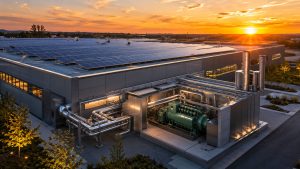
In the industrial manufacturing landscape of 2026, relying on a single energy source is a high-risk operational strategy. Grid instability, fluctuating fuel prices, and strict carbon reduction targets are forcing factories to reconsider their utility infrastructure. To thrive, facilities must achieve two competing goals: lowering operational expenditure while guaranteeing absolute energy security.
The solution driving industrial infrastructure upgrades this year is the hybrid energy system—specifically, the solar cogeneration integration. By combining the low-cost generation of solar photovoltaics (PV) with the continuous, high-efficiency thermal and electrical output of a cogeneration plant, factories are creating decentralized power stations. This setup delivers uninterrupted energy production independent of public utility constraints.
How an Industrial Hybrid Plant Works
A hybrid power plant 2026 structure leverages the strengths of two distinct technologies to eliminate the inherent weaknesses of each. The process begins with the solar component, which provides the lowest Levelized Cost of Energy available today. However, it remains intermittent, producing power only when the sun shines and dipping during cloud cover or nighttime hours. To balance this, the cogeneration (Combined Heat and Power - CHP) unit uses natural gas or hydrogen blends to simultaneously produce electricity and high-temperature thermal energy for factory processes. The brain of the system is an automated microgrid controller that constantly balances these inputs. When solar generation peaks at noon, the system throttles back the cogeneration engine or stores excess electricity. When the sun sets, the CHP engine dynamically ramps up to pick up the electrical load without a single millisecond of downtime.Maximizing 2026 Financial Savings through Hybridization
Investing in an industrial hybrid plant yields major financial benefits by targeting both the electrical and thermal waste common in traditional manufacturing.1. Peak Shaving and Optimized Fuel Consumption
Instead of burning expensive fuel in your CHP unit or paying peak demand penalties to the utility provider during morning start-up surges, the hybrid plant utilizes solar energy to "shave" those expensive consumption peaks. This keeps your fuel demand low and flat, maximizing engine life and slashing raw gas expenses.2. Extreme Thermodynamic Efficiency
Traditional power plants waste more than half of their fuel energy as ambient heat. A combined hybrid system captures that thermal energy directly from the cogeneration engine's exhaust and cooling loops, directing it to your factory’s pasteurization, drying, or heating processes. When matched with cheap daytime solar power, the total system efficiency can exceed 85% to 90%.3. Protection Against Production Interruptions
For industries like plastics, glass, or pharmaceuticals, a voltage drop lasting just a fraction of a second can ruin an entire production batch, costing hundreds of thousands of dollars. The physical coupling of solar and gas-driven generation provides continuous power filtering and instant backup, completely isolating the factory from public grid failures.Key Considerations Before Deployment
Before deploying a hybrid system, engineering teams must evaluate three main variables:- Thermal-to-Electrical Ratio: Your facility must have a consistent need for the heat produced by the CHP engine to make the investment viable.
- Control System Compatibility: The existing switchgear and energy management software must be upgraded to support dynamic, sub-second load sharing between the solar inverters and the generator.
- Fuel Futureproofing: In 2026, new cogeneration assets should feature engines capable of blending hydrogen into the natural gas supply line as green fuel availability expands.