


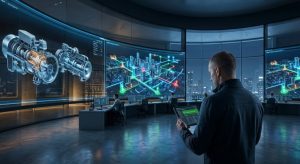
The global energy sector is currently navigating its most significant transformation since the invention of the alternating current. We are moving away from the era of "dumb" iron and copper toward the age of Energy 4.0—a landscape where silicon, software, and sensors dictate the flow of power. Digitalization is no longer a luxury for the avant-garde; it is the prerequisite for managing a decentralized, decarbonized, and increasingly volatile grid.
But as we integrate more intelligence into our power plants and microgrids, a vital question remains: Are our facilities truly ready for this digital frontier, or are we simply layering high-tech veneers over aging infrastructure?
[H2] The Pillars of a Digitalized Energy Facility
Digitalization isn't about having a faster computer in the control room; it’s about a fundamental shift in how data is collected, processed, and acted upon. In 2026, this shift is built upon three technological pillars.The Digital Twin: A Virtual Heartbeat
A Digital Twin is a dynamic, high-fidelity virtual model of a physical energy asset. By syncing real-time data from a gas engine or a solar farm with its digital counterpart, operators can run "what-if" simulations without risking the physical hardware.- Optimization: Testing how a CHP unit handles a specific hydrogen-blend fuel in a virtual environment before adjusting the physical valves.
- Training: Allowing technicians to "practice" complex repairs in a virtual reality space mapped to the exact specs of the facility.
IoT and Edge Computing: Data at the Source
The "Internet of Things" (IoT) in energy facilities translates to thousands of vibration, temperature, and pressure sensors embedded in every critical component. However, the 2026 trend is Edge Computing, where data is analyzed at the sensor level rather than sent to a distant cloud server. Why it matters: In a microgrid, a frequency drop requires a response in milliseconds. Waiting for a cloud server to "think" is too slow. Edge computing allows for autonomous, sub-second decision-making.Predictive Maintenance: From "Fix It" to "Foresee It"
Traditionally, maintenance was performed on a calendar—every 2,000 hours, whether the engine needed it or not. Digitalization enables AI-driven predictive maintenance. By analyzing historical data patterns, AI can detect the "fingerprint" of an impending bearing failure or a cooling leak weeks before a human operator could notice it. This shift drastically reduces the Total Cost of Ownership (TCO) by preventing catastrophic failures and extending the useful life of the machinery. We aren't just fixing things anymore; we are preventing them from ever breaking.The Achilles' Heel: Cybersecurity in 2026
The darker side of digitalization is the expanded "attack surface." Every sensor, inverter, and smart meter is a potential entry point for cyber-adversaries. As energy facilities become more connected to the public internet for remote monitoring, the risk of state-sponsored or criminal cyber-attacks increases exponentially. To be "ready for the future," facilities must adopt a Zero Trust Architecture. This means:- Micro-segmentation: If a solar inverter is compromised, the breach is isolated and cannot spread to the main generator controls.
- Air-gapping: Keeping critical "kill-switch" controls physically disconnected from any external network.