


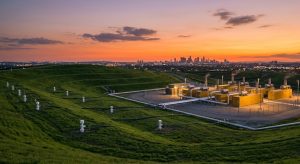
As global energy markets in 2026 pivot toward decarbonization, the management of municipal solid waste has moved from a logistics challenge to a critical frontier in renewable energy. Landfills are inherently biological reactors that produce Landfill Gas (LFG)—a potent mixture of methane and carbon dioxide. Historically, this gas was seen as a dangerous liability to be flared or vented. Today, the transition to electricity generation from landfill gas is framed as a win-win for the environment and the economy. But as we refine our "Green" definitions, the question remains: is the LFG-to-energy model truly sustainable for the long term?
To answer this, we must look at the thermodynamic efficiency of the process, its role in methane mitigation, and its position within the broader circular economy.
The Mechanics of Energy Recovery from Waste
The sustainability of LFG starts with its mechanical collection. When organic waste decomposes anaerobically in a landfill, it produces gas that is roughly 50% methane. If left unmanaged, this gas migrates through the soil or escapes into the atmosphere.- Extraction: A network of vertical and horizontal wells is drilled into the waste mass.
- Collection: A blower creates a vacuum, pulling the gas to a central processing point.
- Treatment: The gas is "scrubbed" to remove moisture, particulates, and siloxanes (which can destroy engine internals).
- Generation: The clean gas is fed into specialized internal combustion engines or turbines to produce baseload electricity.
The Methane Mitigation Argument: Why It’s "Greener" than the Grid
The strongest pillar of the LFG sustainability model is methane mitigation. Methane is a short-lived but incredibly aggressive greenhouse gas, with a global warming potential (GWP) over 25 to 80 times higher than CO2 depending on the timeframe measured. By burning methane in an engine to create electricity, the process converts it into CO2 and water vapor. While CO2 is still a greenhouse gas, the net reduction in "warming impact" is massive.- Avoided Emissions: Capturing LFG prevents raw methane from entering the atmosphere.
- Grid Displacement: The electricity produced usually replaces power generated from fossil fuels (coal or natural gas), providing a secondary carbon credit to the project.
- Baseload Reliability: Unlike solar or wind, LFG is a "baseload" renewable. It generates power 24/7, providing the stability that modern grids desperately need as they integrate more intermittent sources.
LFG in the Circular Economy: Recovery vs. Disposal
In the waste management hierarchy, the most sustainable options are Reduce, Reuse, and Recycle. However, for the "residual waste" that cannot be recycled, energy recovery is the final safety net before the waste becomes a total loss. Landfill gas to energy fits perfectly into the "Recover" tier. It ensures that even the waste we failed to recycle still contributes to the energy grid. In 2026, the trend is moving toward "Integrated Waste Parks" where LFG engines work alongside plastic recycling plants and organic composters to maximize the value of every ton of municipal waste.Technical Challenges and Sustainability Trade-offs
Sustainability isn't just about the fuel; it's about the lifecycle of the equipment. LFG engine efficiency is constantly threatened by the "dirty" nature of the gas.- Siloxanes: These compounds, found in many consumer products, turn into abrasive silica (glass) inside the engine during combustion. This increases maintenance costs and shortens engine life.
- Gas Decline: Landfills are finite. Once a landfill stops accepting waste, the gas production eventually peaks and begins a long decline. A sustainable model must account for this decline by using modular engine designs that can be moved to other sites as gas levels drop.
- Monitoring (CEMS): To remain truly sustainable, LFG plants must utilize Continuous Emission Monitoring Systems to ensure that the combustion is complete and that "methane slip" (unburned methane escaping the exhaust) is kept to an absolute minimum.