


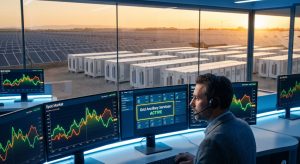
The landscape for Independent Power Producers (IPPs) in 2026 has undergone a fundamental paradigm shift. The era of easy, long-term government subsidies—such as fixed Feed-in Tariffs—is largely over in most developed and emerging markets. Today, profitability is no longer guaranteed by simply "plugging into the grid." Instead, it is determined by an IPP’s ability to navigate volatile merchant markets, provide critical grid services, and leverage hybrid technology.
As we look at the financials of 2026, becoming an IPP remains highly profitable, but the "how" has changed. It is no longer a passive investment; it is an active energy trading game.
The Shift from Subsidies to Merchant and Corporate Markets
In 2026, the primary revenue driver for new IPPs has moved away from government-backed fixed prices toward Merchant Power and Corporate PPAs (Power Purchase Agreements).The Rise of Corporate PPAs
Large industrial consumers and tech giants are now the biggest buyers of independent power. These corporations are willing to sign 10-to-15-year contracts to secure "Green Energy" at a fixed price to hedge against utility volatility.- Profitability Factor: Corporate PPAs provide the "bankability" required for project financing, offering a stable floor price while allowing the IPP to sell excess generation on the spot market.
Merchant Market Volatility
For IPPs operating without long-term contracts, the Spot Market is the primary battlefield. With more renewables on the grid, price volatility is extreme. We often see negative prices during solar peaks and massive price spikes during evening ramps.- Profitability Factor: IPPs with flexible assets, such as gas engines or batteries, can "time the market." They stay offline during negative price periods and sell at a premium during peaks, significantly boosting their total return on investment.
Revenue Diversification: Selling More Than Just Energy
One of the biggest lessons of 2026 is that an IPP shouldn't just sell kilowatt-hours. High-margin profitability now comes from Ancillary Services—the invisible services that keep the grid stable.- Frequency Regulation: The grid must stay at a precise frequency (50Hz or 60Hz). IPPs with fast-responding assets, like batteries or reciprocating engines, are paid premium "readiness" fees to balance these micro-fluctuations.
- Reactive Power Support: Maintaining voltage levels is critical for industrial zones. IPPs can earn significant revenue by providing reactive power, which requires almost zero fuel consumption.
- Capacity Markets: In many regions, the grid pays you simply for existing and being available to run during a "stress event," regardless of whether you actually generate power.
The Impact of BESS on IPP Profitability
In 2026, a "Solar-only" or "Wind-only" IPP is often at a disadvantage due to curtailment—where the grid forces a shutdown because there is an oversupply of power. The 2026 Multiplier: Integrating a Battery Energy Storage System (BESS) transforms an IPP from a price-taker into a price-maker. By storing energy when prices are near zero or negative and discharging it when the grid is stressed, the return on investment for a hybrid IPP project is significantly higher than a standalone renewable site. The ability to "shift" energy to the most expensive hour of the day is the ultimate profitability lever.Lifecycle Costs vs. Market Realities
The Levelized Cost of Energy (LCOE)—which represents the average cost to produce electricity over the system's life—continues to fall for solar and wind. However, in 2026, a low LCOE is not enough. If your low-cost energy is produced at the same time as every other provider (e.g., midday solar), your captured price will be low. Profitability in 2026 is about the Value of Energy (VOE)—producing power when the grid needs it most, not just when the weather permits.Key Risks to Profitability in 2026
- Grid Congestion: You can build a 100 MW plant, but if the local substation is full, your output will be restricted. Grid connection wait times are currently a major hurdle for internal rates of return.
- Cannibalization: As more solar IPPs join the grid, they drive down the daytime price for everyone. This "cannibalization effect" requires IPPs to diversify into other technologies or storage.
- Regulatory Shifts: Changes in carbon pricing or grid access fees can alter the financial model overnight, requiring agile management.