


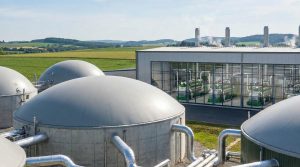
Turning Organic Waste Into High-Efficiency Energy Through Modern Biogas Engine Technologies
The conversion of organic waste into energy is no longer a simple disposal method; it is a sophisticated thermodynamic process that demands precision engineering. For industrial energy developers and plant managers, the economic viability of a biogas project hinges on one critical metric: biogas engine efficiency.
Modern internal combustion engines (ICE) designed for biogas are fundamentally different from their natural gas counterparts. They must handle variable fuel calorific values, high CO2 content, and aggressive contaminants while maintaining high availability. This article explores the engineering innovations—from high-compression thermodynamics to digital twin monitoring—that are redefining biogas plant optimization.
Optimized heat recovery loops ensure that the digesters remain at a stable temperature even in winter, stabilizing gas production rates. In advanced setups, exhaust heat is used to pasteurize waste or dry digestate, creating value-added fertilizer products.
Advanced Engine Design Driving Biogas Engine Efficiency
The efficiency of a biogas engine is determined by its ability to extract maximum work from a fuel source that is inherently less energy-dense than natural gas (typically 50-60% CH4). To achieve electrical efficiencies exceeding 43% and total CHP efficiencies above 90%, manufacturers have engineered specific design alterations.High Compression Ratios and Turbocharging
Standard natural gas engines operate at compression ratios (CR) around 11:1 or 12:1. However, biogas possesses a high "knock resistance" due to its significant CO2 content, which acts as an inert gas suppressing auto-ignition. Modern biogas engines exploit this property by utilizing high compression ratios, often reaching 14:1 or even 15:1. This increase in CR directly improves thermal efficiency by expanding the work area within the pressure-volume (P-V) diagram. To compensate for the lower energy density of the fuel, advanced turbocharging systems are employed. These are not standard automotive turbos; they are precision-matched units capable of variable geometry operation. They force-feed the combustion chamber with a lean fuel-air mixture at high boost pressures, ensuring that the engine maintains its rated power output even when the methane concentration in the biogas fluctuates.Advanced Ignition and Fuel Injection Systems
Achieving complete combustion of a lean biogas mixture is challenging. Traditional spark plugs often struggle to ignite the mixture consistently across the entire cylinder volume, leading to unburned hydrocarbons. The solution lies in pre-chamber ignition technology. In this design, a small amount of enriched gas mixture is ignited in a separate pre-chamber. This ignition shoots high-energy plasma jets into the main combustion cylinder, ensuring rapid and uniform flame propagation.- Benefit: This allows the engine to run on a leaner mixture (higher air-to-fuel ratio), which lowers peak combustion temperatures and significantly reduces NOx emissions.
- Injection Precision: Modern electronic fuel injection systems adjust the gas admission valves in real-time (millisecond precision) based on the feedback from knock sensors and exhaust gas temperature (EGT) probes, stabilizing the engine regardless of gas quality variations.
Minimizing Methane Slip and Emissions Control
"Methane slip"—the escape of unburned methane through the exhaust—is a critical inefficiency and environmental hazard. In older lean-burn engines, crevice volumes in the combustion chamber would trap gas that failed to ignite. New piston crown geometries and optimized ring packs have reduced these crevice volumes significantly. Furthermore, oxidation catalysts (Oxicat) are now standard in high-performance setups to treat exhaust gases. By minimizing methane slip, operators not only comply with strict environmental regulations but also retain more fuel energy for conversion into work, directly boosting biogas engine efficiency.Gas Pre-treatment and Biogas Plant Optimization Techniques
An engine is only as reliable as the fuel it consumes. Raw biogas contains hydrogen sulfide (H2S), siloxanes, and moisture—compounds that destroy engine internals. Biogas plant optimization begins before the fuel enters the engine.H2S and Siloxane Removal Technologies
H2S forms sulfuric acid during combustion, which acidifies the engine oil and corrodes bearings and cylinder liners. Siloxanes, common in sewage and landfill gas, turn into abrasive silica (sand) / ceramic deposits on valves and pistons.- Active Carbon Filtration: The industry standard for polishing, essential for removing siloxanes to levels below <5 mg/Nm³.
- Biological Desulfurization: A cost-effective method where bacteria on a support medium oxidize H2S.
- Refrigerated Drying: Cooling the gas to ~5°C condenses moisture and removes water-soluble contaminants.
Heat Recovery Systems for Biogas Plant Optimization (CHP)
The thermodynamic limit of an internal combustion engine means ~50% of energy is rejected as heat. A standalone generator wastes this potential. A Combined Heat and Power (CHP) configuration is the gold standard for efficiency.| Heat Source | Temperature Range | Application |
| Engine Exhaust Gas | 450°C - 500°C | Generating process steam, thermal oil heating, or driving absorption chillers. |
| Jacket Water | 85°C - 90°C | Digester heating (maintaining mesophilic/thermophilic process), space heating. |
| Intercooler (2nd Stage) | 40°C - 50°C | Low-grade heating, pre-heating boiler feed water. |
Maintenance and Digital Monitoring for Sustained Performance
High efficiency at commissioning is meaningless if it degrades over time. Biogas engine technologies now integrate deeply with the Industrial Internet of Things (IIoT).Condition Monitoring and Predictive Maintenance
Reactive maintenance (fixing it when it breaks) is disastrous for ROI. Preventive maintenance (scheduled service) is safe but can be wasteful. Predictive maintenance is the modern standard. Sensors continuously stream data points:- Vibration Analysis: Detects early bearing wear or misalignment.
- Oil Condition Sensors: Measures acidity (TBN/TAN) and viscosity in real-time, allowing oil changes based on actual degradation rather than fixed hours.
- Cylinder Balancing: The Engine Control Unit (ECU) monitors the work output of each cylinder. If a cylinder deviates, the system alerts operators to potential injector fouling or valve issues before major damage occurs.