


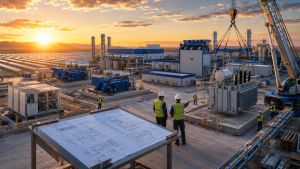
Building a modern utility-scale power plant is a massive undertaking that requires coordinating complex engineering, sourcing heavy-duty machinery, and executing precise civil construction. For independent power producers and industrial operators, managing these moving parts individually introduces immense financial and operational risks. To streamline development, the global energy sector relies on a highly structured framework: the EPC engineering procurement construction contract.
An EPC contract in power plant projects acts as a comprehensive, single-point-of-responsibility agreement. By consolidating design, supply chain management, and physical assembly under a single specialist, investors can transform a highly volatile infrastructure build into a predictable, turnkey power plant EPC delivery.
Demystifying the EPC Framework in Power Generation
To understand the value of this model, it is essential to examine what an EPC contractor for power generation actually manages across the three core phases:- Engineering: This phase goes far beyond basic blueprints. It encompasses complete geological assessments, thermodynamic cycle calculations, grid interconnection modeling, and environmental compliance studies. The engineering must be flawlessly tailored to the specific fuel source and local environmental conditions.
- Procurement: Sourcing heavy equipment like high-output gas engines, steam turbines, heat recovery systems, and high-voltage transformers requires deep supply chain leverage. The contractor manages all equipment manufacturing inspections, international logistics, customs clearance, and on-site delivery schedules.
Risk Allocation: Who Bears the Burden?
The primary reason why developers prefer EPC project management in energy is the radical shift in risk allocation. Under a traditional multi-contracting approach, the project owner acts as the coordinator. If a turbine fails to sync with the grid, the installer blames the designer, and the designer blames the manufacturer, leaving the owner to cover the costly delays. An EPC contract simplifies this by placing the entire risk burden on the contractor. The agreement guarantees three critical metrics:-
Guaranteed Maximum Price
-
Guaranteed Completion Date
-
Guaranteed Performance Output
What to Expect During the Project Phases
A typical turnkey power project progresses through a highly structured timeline:- Front-End Engineering Design: Developing the conceptual layout, verifying grid connection feasibility, and securing initial municipal permissions.
- Detailed Design and Major Sourcing: Finalizing civil and electrical drawings while placing orders for long-lead equipment like generators and transformers.
- On-Site Mobilization and Civil Works: Executing ground piling, pouring concrete foundations, and constructing safety enclosures.
- Mechanical and Electrical Assembly: Installing the primary generation units, connecting thermal piping networks, and routing high-voltage cables.
- Commissioning and Handover: Conducting functional safety tests, executing performance run trials, and finally handing over the operational keys and as-built documentation to the owner.